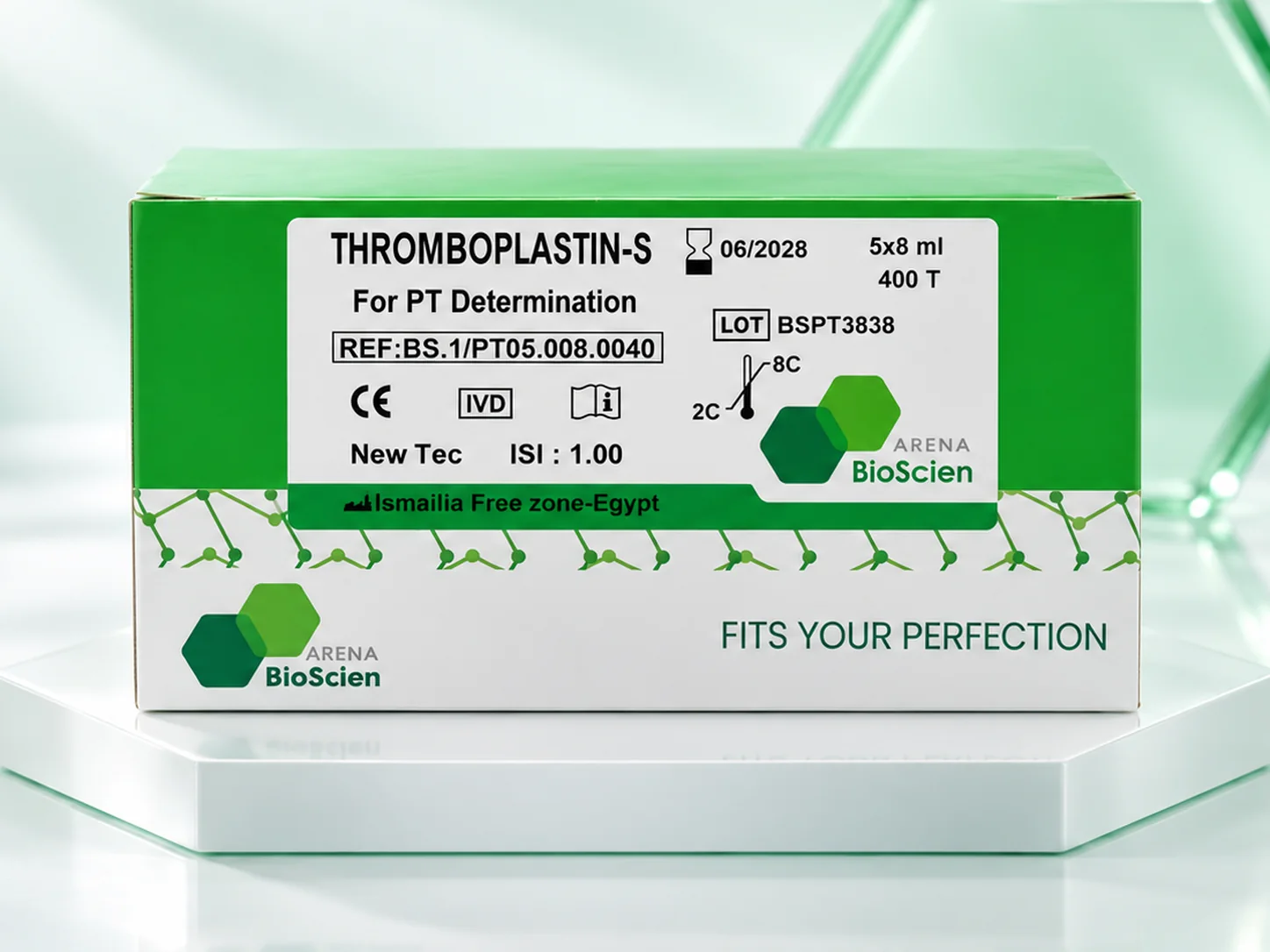
Coagulation
Thromboplastin-S ISI:1.00
Diagnostic reagent for the in-vitro quantitative determination of prothrombin time (INR) in human plasma in both automatic and manual systems.
| Range | Coagulation |
|---|---|
| Type of specimen | Plasma. The blood should be collected by careful venipuncture and transferred into a tube containing trisodium citrate (0.11 mol/L, 3.2%); mix blood with the anticoagulant at a ratio of 9:1 (4.5 ml blood + 0.5 ml sodium citrate), avoiding foam formation during mixing. For occasional patients with a haematocrit below 20% or above 55%, this ratio must be readjusted to ensure a valid result. |
| Specimen handling | Centrifuge immediately for 15 minutes at 1500–3000 rpm (approximately 1500 g) and transfer the plasma into a clean test tube; it should be ensured that the plasma is free from platelets. Cap the test tubes to prevent deterioration of samples. Plasma must be tested immediately; if the specimens are held at 2–4 °C they may be tested within 3 hours. Oxalated plasma may induce prolonged clotting times. Due to activation of factor VII by cold, long storage of plasma at 2–8 °C may shorten the PT result; contamination by thromboplastin or haemolysed specimens may also shorten it. |
| Storage | Thromboplastin-S reagent is ready to use and is stable until the expiry date on the label when properly stored refrigerated at 2–8 °C (do not freeze). Stability: 2 years at 2–8 °C, 1 week at 18–25 °C. The reagent is almost clear; do not use it if it is unusually turbid or contaminated. |
| Catalogue numbers | 5 |
More in this range
View the full range
Coagulation
Let’s equip your laboratory.
Tell us what your laboratory needs — our team will get back to you with product information, availability and a quotation.